
CASE STUDY: Ibis Marine Products
Rubber Pilot Ladder Step Manufacturing Development
2024/25
With support from the AISI, Ibis Marine Products has successfully redesigned its pilot ladder step, transforming it from a heavy, costly, and slow-to-produce component into a lighter, more durable, and sustainable product. The project focused on replacing the traditional wooden step with a compression-cast rubber version incorporating recycled tyre crumb and glass fibre reinforcement. This change reduced weight by over 50%, circumvented wood procurement issues, and optimised the entire manufacturing process from casting to assembly. The redesigned step meets ISO 799 specifications and is positioned for both local and export markets once certified.
Key efficiency gains stem from streamlined moulding, reduced post-processing, and faster assembly using aluminium crimping instead of rope binding. Production time for a 10m ladder dropped from 900 minutes to 240 minutes, enabling Ibis to scale output to meet stock and bulk export demands. The compression casting process was chosen over injection moulding due to lower tooling costs, in-house production control, no minimum order quantities, and higher recycled content use, ensuring better alignment with sustainability and small business cashflow requirements.
Industry benefits include a lower-cost, more resilient product that is easier to maintain, with improved grip and visibility for safety. The use of recycled car tyres supports environmental goals and stimulates demand for local rubber crumb suppliers. Additionally, the shift to an all-in-one rubber step design removes the dependency on increasingly scarce wooden components, mitigating supply chain risks. The new design also offers international competitiveness potential, especially in markets where quick replacement and compliance with stringent safety standards are priorities.
Socio-economic benefits centre on job creation and skills development, as the product is entirely hand-made and suitable for production by unskilled labour with training. The anticipated scaling of production will create employment for youth, women, and black workers, while building in-house expertise in compression casting and product quality control. The project further contributes to import substitution by enabling local manufacture of a component previously sourced internationally, and positions Ibis as a stronger SMME in the marine safety sector.
Project Impact
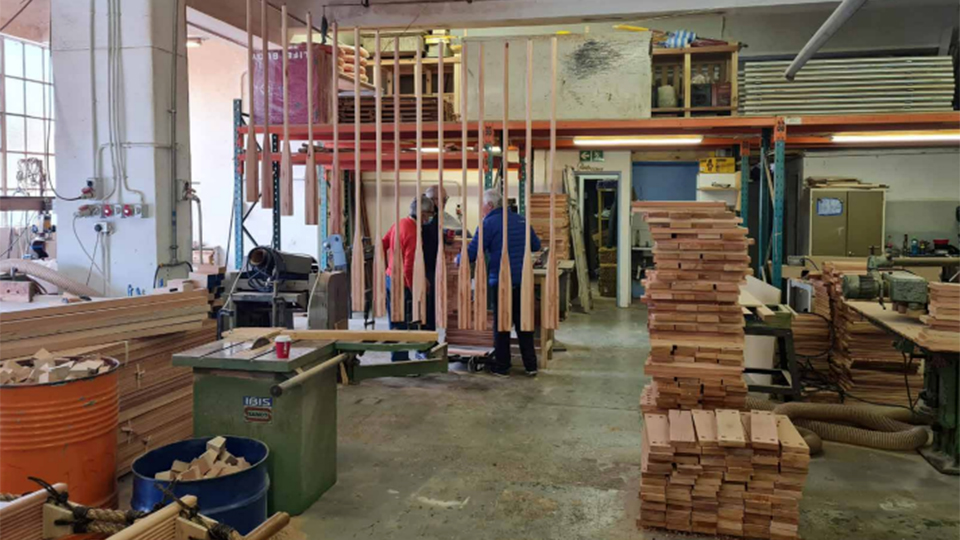
From it’s factory in Woodstock, Cape Town, IBIS Manufacturing has established a reputation for the production of quality products for use in the marine industry.

