
CASE STUDY: Icarus Marine
Hydrofoil Flap Control System
2024/25
Icarus Marine’s hydrofoil flap control system project represents a significant step forward in high-speed marine vessel technology. By developing an in-house flap control system for hydrofoils, Icarus Marine aims to address a market gap. The system’s ability to adjust lift dynamically will allow operators to fine-tune vessel performance according to sea conditions and speed, improving efficiency, stability, and passenger comfort. This innovation positions South Africa to offer a unique turnkey hydrofoil package that combines advanced mechanical design, software intelligence, and local manufacturing expertise.
From an environmental and operational impact perspective, this technology supports global trends toward green maritime solutions. Hydrofoils significantly reduce drag by lifting the hull partially or fully out of the water, lowering fuel consumption and emissions. Icarus’ approach keeps the hull in contact with the water for propulsion simplicity while using adjustable flaps to adapt lift and trim. This hybrid method improves energy efficiency without requiring a complete redesign of existing vessel propulsion systems, making it a more accessible upgrade for commercial, leisure, and military operators.
Icarus Marine, with over 18 years of hydrofoil expertise, will conduct the design and integration work in Cape Town, supported by Skeg Product Development. The development of a proprietary control solution reduces reliance on imported, non-specialised hardware, enhancing long-term competitiveness and export potential.
The project will also have technological and skills development benefits. It integrates mechanical engineering, electronics, software programming, and user interface design into a single marine system. Engineers will design compact actuators capable of independent port and starboard control for roll stability, develop a marine-suited dashboard display for real-time flap monitoring, and create control algorithms adaptable to a wide range of vessel types.
Lab testing with simulated sea conditions will ensure the system’s readiness for deployment, with field testing planned when a suitable client vessel becomes available.
“This product is designed to add further value to our hydrofoil offerings, which are primarily focused on the overseas market. Our client base spans every continent except South America, and our intention is to begin actively marketing the product once development is complete,” comments Gunther Migeotte, Executive Director for Icarus Marine. “At this stage, we are not offering it to clients because it is essential that, when we do, it is fully tested and proven reliable. We already have an early adopter lined up who is prepared to implement the product on one of their vessels.”
Project Impact
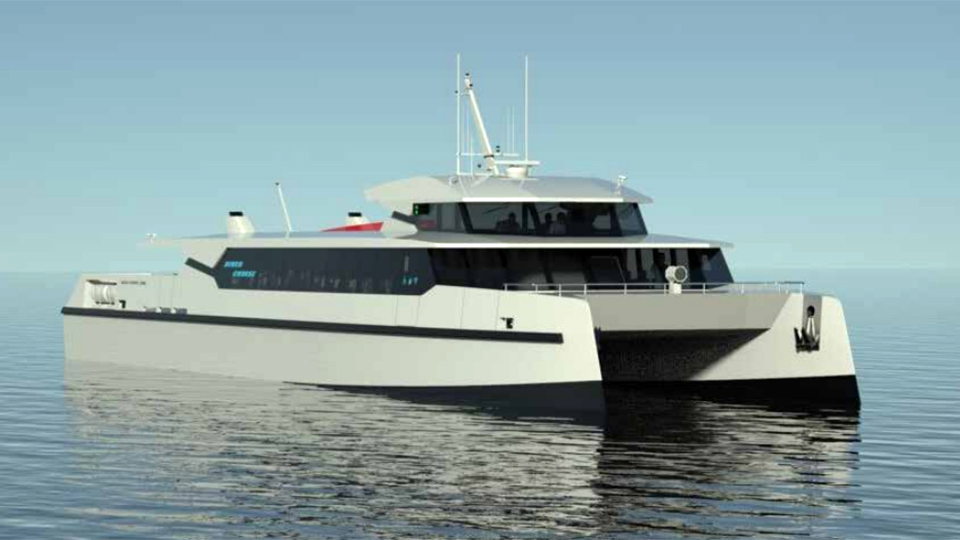
A hydrofoil-supported catamaran reduces drag by lifting its hulls partially out of the water, resulting in higher speeds, improved fuel efficiency, and enhanced stability. This system delivers a smoother ride in rough conditions while lowering operational costs and increasing overall performance.

