
CASE STUDY: Kusasa Aerospace
Drone Payload Delivery System Project
2024/25
A drone payload delivery system offers fast, cost-effective, and flexible transport of goods, enabling time-critical deliveries such as medical supplies, emergency equipment, or high-value items to reach remote, congested, or otherwise hard-to-access areas. By bypassing traditional infrastructure, drones can reduce delivery times, lower operational costs, and operate in conditions that ground vehicles may struggle with, such as poor road networks or disaster zones. Their adaptability to different payload types and compatibility with multiple platforms also expands their utility across commercial, humanitarian, and industrial applications, creating new opportunities for efficiency and service innovation.
In collaboration with the CSIR and AISI, Kusasa Aerospace is spearheading a drone payload delivery system project and Phase 1 has been successfully completed. The initial phase concentrated on market research, stakeholder engagement, and preliminary engineering planning, achieving key milestones that have set a strong foundation for the next stages of development.
Research conducted during Phase 1 has confirmed strong market opportunities in both medical and consumer last-mile delivery, with a particular gap for a flexible, cross-compatible system in the 30kg-class drone category. The new payload delivery system will be designed for compatibility with multiple drone platforms, reducing reliance on specific models and enabling broader adoption across different operational environments.
The design will prioritise safety, operational efficiency, and versatility. It will need to carry at least two 2kg parcels per flight, be easy to load and unload, and incorporate redundancy measures to protect both payloads and people on the ground. The system will also maximise available payload space while integrating seamlessly with its host drone’s attachment points, making it adaptable to a wide range of delivery scenarios, including high-value and time-critical missions such as medical supply distribution.
Phase 2 will advance into detailed engineering design, prototyping, and operational testing. This will include computer aided design (CAD) refinement, component sourcing, prototype fabrication, and field trials. Risk mitigation strategies are in place to address supply chain and regulatory challenges, with engagement planned with the South African Civil Aviation Authority once the operational platform is finalised.
If successful, the project will deliver South Africa’s first locally developed, cross-platform drone payload delivery system, reducing reliance on imported technology, strengthening local manufacturing capabilities, and unlocking new commercial and humanitarian opportunities across the region.
Alongside the technical work, Kusasa has launched a bursary programme and is planning a graduate programme, ensuring the project contributes to local skills development and knowledge transfer within the aerospace sector.
Project Impact
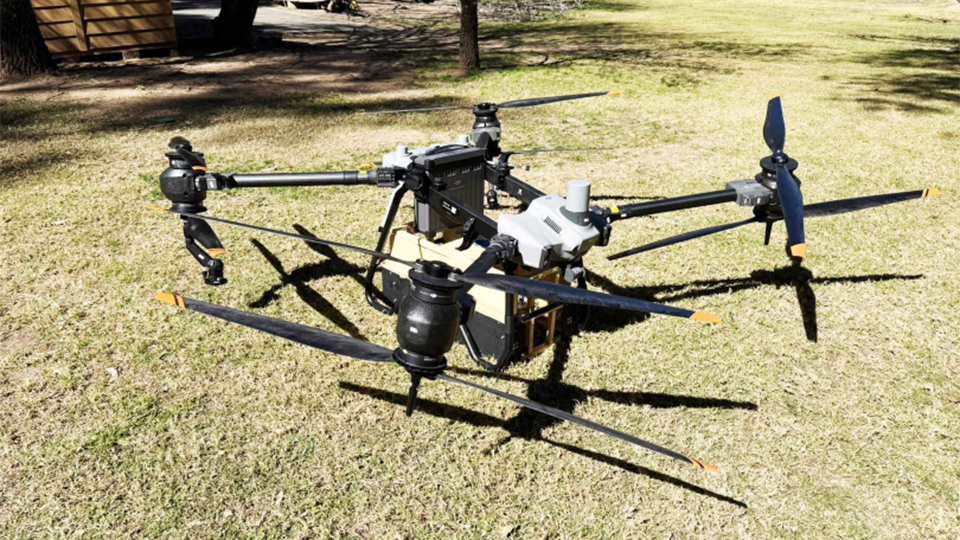
The drone utilised for this project is equipped with a coaxial twin rotor. The drone with eight motors in total (four coaxial pairs) is also known as an octocopter.

