
CASE STUDY: Bronberg Dynamics
Development of a 12kg Minimum Take-off Weight (MTOW) Battery Powered UAV for Security Applications
2024/25
Bronberg Dynamics, with the support of the Aerospace Industry Support Initiative AISI, has successfully completed a groundbreaking project to develop a cost-effective, high-performance unmanned aerial vehicle UAV helicopter tailored to African requirements in surveillance, mapping, and precision agriculture.
Addressing the heavy reliance on costly imported UAVs, the project resulted in the design and manufacture of a modular, lightweight, coaxial rotor UAV with vertical take-off and landing VTOL capabilities. This locally developed solution delivers exceptional performance at a competitive cost, proving that South African innovation can match and even exceed global standards in UAV technology.
What sets this UAV apart is its focus on solving context-specific challenges. Designed for extended flight endurance, compact deployability, low acoustic signature, and modular payload capacity, the platform was shaped through close consultation with both military and civilian stakeholders. These design priorities translated into an impressive flight time of over 90 minutes, well beyond the original 60-minute target, achieved through efficient power management and a custom-built flight controller. The result is a UAV platform that is not only technologically advanced but also highly practical for diverse African operational environments.
The project delivered significant technological advancements. Features such as interchangeable payload mounts, real-time telemetry, a microSD-based data logging system, and control algorithm tuning highlight the system’s flexibility and performance. Its robust, modular design enables swift payload swaps between optical and thermal sensors, while the aircraft can be deployed in under 10 minutes, ideal for rapid response scenarios. The UAV also demonstrated reliable performance in gusty conditions, showcasing its field-readiness and stability in demanding use cases.
On an organisational level, the project marked a strategic leap forward for Bronberg Dynamics. Developing an in-house flight controller reduced dependency on foreign systems and expanded the company’s internal technical capacity. Local prototyping and partnerships with domestic manufacturing firms helped validate an efficient, end-to-end product development process. These achievements not only strengthened Bronberg’s innovation pipeline but also laid the groundwork for future UAV iterations tailored for broader market applications.
The broader socio-economic and industrial impacts are equally notable. The project supports industrial competitiveness, import substitution, and localisation within the aerospace sector. It enabled job creation and practical training for engineering students and young professionals, building a skilled pipeline of aerospace talent. The project aligns with AISI’s mandate to support sovereign capability, local innovation, and industrialisation, setting a powerful example of how strategic public-private collaboration can generate commercially viable, transformative outcomes for South Africa’s high-tech manufacturing landscape.
Project Impact
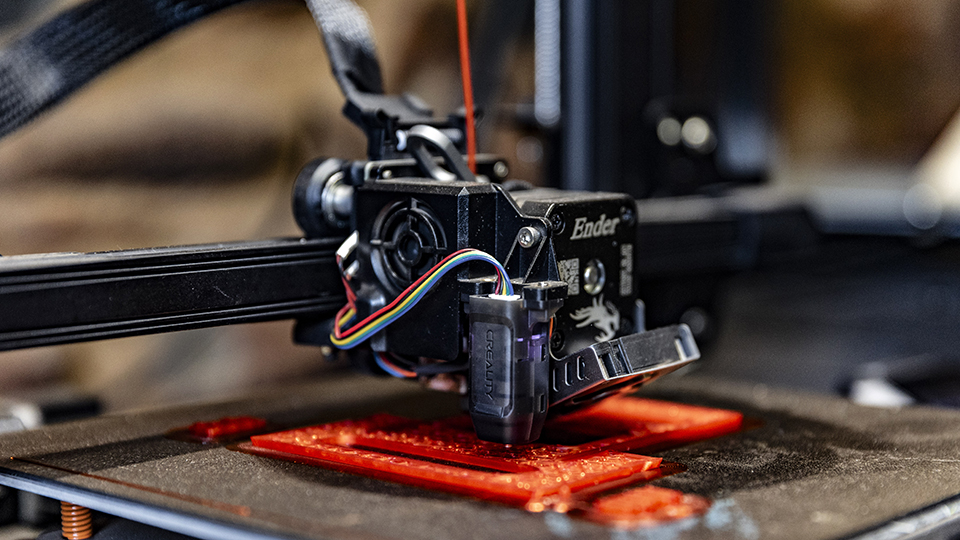
Leading technology was utilised during all development phases

